Web Authentication Action in NetScaler

On one of my recent deployments, I needed to set up external access using NetScaler to an internally hosted web application (Grafana).

Grafana is a cross-platform open source application for graphical representation of data from various data sources such as InfluxDB, MySQL, PostgreeSQL, Prometheus and Graphite.

The challenge here was that the customer wanted to pre-install authentication on the NetScaler, but the users were only known to the web application itself.

The question that therefore came to me was:
How can I check the user of the web application if only the web application itself has access to the user data?

I had only used standards like LDAP, RADIUS, CERT, SAML etc. for user authentication on NetScaler, but these were not useful here because the target system should not be changed.

Continue reading “Web Authentication Action in NetScaler”

SAML Authentication between Citrix & Microsoft with Azure MFA

Update to the latest cloud navigation.

As a result of increasing projects, here is a little how-to with the summary of my previous articles. The main points are:

  • Azure AD Seamless Single Sign-On (PTA / PHS)
  • SAML Authentication (Azure AD as IdP & Citrix Gateway as SP)
  • Citrix Federated Authentication Service (FAS)
  • Microsoft Azure Multi-Factor-Authentication with Conditional Access

Requirements

  • Fully working Citrix Virtual Apps and Desktop Environment (StoreFront & DDC Minimum Version 7.9)
  • NetScaler with successful base configuration & activated Enterprise or Platinum license (Minimum Version 12.1 Build 50+ for native workspace app, for browser Minimum Version 11.1)
  • Configured Unified Gateway vServer
  • Internal and external DNS entries for Unified Gateway vServer (e.g. citrix.deyda.net)
  • Certificates for DNS entries (wildcard certificates are the easiest)
  • Existing Azure Tenant with Azure-AD base configuration (Domain, AAD Sync) & activated Azure AD Premium license
  • AD Connect version installed and configured (Minimum Version 1.1.644.0)
  • Firewall release for *.msappproxy.net on port 443
  • Domain administrator credentials for the domains that connected to Azure AD via AD Connect
  • Installed Authenticator App on Test User Mobile Phone
Continue reading “SAML Authentication between Citrix & Microsoft with Azure MFA”

Citrix ADC 101 – Fundamentals

The following is a collection of basic information about Citrix ADC. From licensing, to the most important commands, to the update procedures that can be performed.

General Information

Here is some basic information about Citrix ADC.

Operating System and Architecture

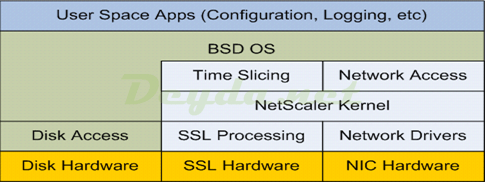
Citrix ADC is based on the open source operating system FreeBSD. Unlike the very similar Linux, FreeBSD has a modular kernel and Citrix has taken advantage of this to modify FreeBSD’s Bash shell by removing the networking subsystem and replacing it with its own. The modifications were placed in a custom kernel module called NetScaler Core Packet Processing Engine (PPE).

Citrix ADC FreeBSD
Continue reading “Citrix ADC 101 – Fundamentals”

Why a Windows Server 2019 VDI should be Hybrid Azure AD joined

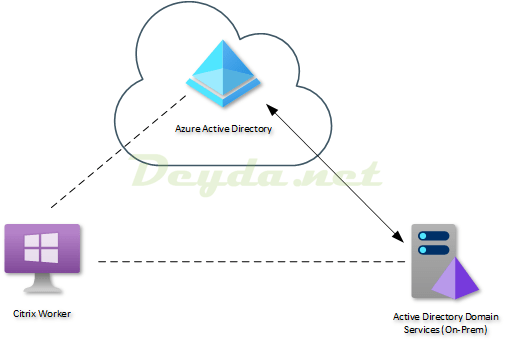
What is Hybrid Azure AD Join ?

Let’s just start with the official definition from the Microsoft documentation:

Hybrid Azure AD Join: Joined to on-premises AD and Azure AD requiring organizational account to sign in to the device.

This means that after the device is Hybrid Azure AD joined, it behaves the same as any other computer connected to Active Directory.

Sign in with an Active Directory account is required.
User credentials are verified against an Active Directory domain controller.
Group Policy objects for users & computers read from the domain controller are applied automatically.

Hybrid Azure AD Join

After the Active Directory connection process is complete, additional steps are performed asynchronously in the background to register the device in Azure AD as well.

Continue reading “Why a Windows Server 2019 VDI should be Hybrid Azure AD joined”

Installing Workspace Environment Management

Workspace Environment Management optimizes Citrix workers for the best possible performance (user density, logon time and application response time).

WEM is subject to the Current Release Lifecycle (Additional Component) and therefore there is no LTSR version of WEM available.

To use WEM, you must have an active Customer Success Services (CSS) for one of the following licenses:

  • Citrix Virtual Apps Advanced
  • Citrix Virtual Apps Premium
  • Citrix Virtual Apps and Desktops Advanced
  • Citrix Virtual Apps and Desktops Premium
  • Citrix Workspace Premium
  • Citrix Workspace Premium Plus

Technical Overview

Workspace Environment Management (WEM) is based on the following architecture:

WEM architecture

Continue reading “Installing Workspace Environment Management”